

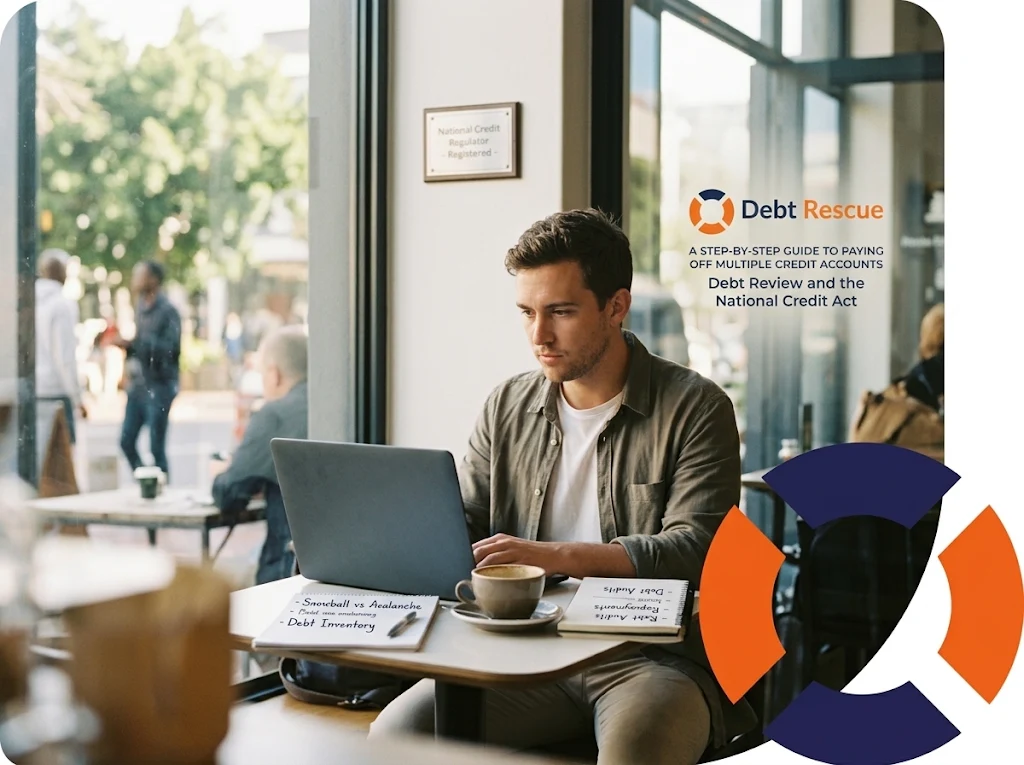
Managing multiple credit accounts, from store cards to personal loans and vehicle finance, quickly turns month-end into a juggling act. If competing debit orders are draining your salary and leaving you with nothing to spare, implementing a focused debt reduction strategy is the fastest way to clear your balances and regain control of your cash flow. Here’s how to tackle what you owe, step by step.
Multiple Credit Accounts Become Overwhelming
Each credit card, store account, and personal loan carries its own due date, administration charges, and interest rates.
When you only pay the minimum required balance on revolving facilities, the majority of your payment goes directly toward interest and service fees rather than the principal debt. This leaves your balances stagnant despite making consistent monthly payments, making it difficult to gain real financial traction.
Step 1: Lay the Groundwork
Before choosing a repayment method, you need an unfiltered view of your financial standing. Effective financial planning for debt reduction begins with two practical steps:
- Audit Your True Monthly Cash Flow: Compare your net monthly income against unavoidable essentials like rent or bond repayments, utilities, transport, school fees and groceries. Go through your bank statements to catch hidden leaks, such as forgotten subscriptions or unused memberships and daily convenience purchases. Everything you save here becomes capital for your repayments.
- Compile a Debt Inventory: List every credit account on a single page or spreadsheet.
For each facility, note down:
- The credit provider
- Total outstanding balance
- Interest rate percentage
- Minimum monthly repayment
Having these figures in black and white strips away uncertainty, giving you a baseline.
Step 2: Choose a Repayment Strategy
Once you have identified how much surplus cash you can redirect each month, pick a repayment method that aligns with your financial goals.
The Debt Snowball
With the Snowball strategy, you maintain the minimum payments on all accounts except the one with the smallest outstanding balance. Every available extra Rand goes toward eliminating this single, smallest debt.
Once cleared, you take the entire amount you were paying toward that balance and roll it into the next smallest account. Eliminating smaller store cards early delivers quick wins, building steady motivation to tackle larger balances.
The Debt Avalanche
You maintain minimum instalments across all facilities, but direct your surplus cash toward the account carrying the highest interest rate, typically a credit card or unsecured short-term loan.
Once that expensive debt is settled, you shift your focus to the account with the next highest rate. It could take longer to see the first account close, but this strategy minimises the cumulative interest charges you pay over time.
Step 3: Implement Everyday Habits
Choosing a repayment strategy is only half the battle; maintaining consistency ensures long-term success.
- Freeze New Credit Usage: Avoid opening new retail accounts or drawing against credit cards while attempting to repay them. Switch to cash or debit facilities for daily expenses to avoid undoing your progress.
- Put Your Money to Work: Allocate at least 80% of unexpected income, such as annual performance bonuses, SARS tax refunds, or proceeds from selling unused household items, straight toward your target balance.
- Automate Fixed Transfers: Arrange your debit orders or bank transfers for the day immediately following payday. Paying your debt obligations first prevents accidental overspending during the month.
- Track Your Milestones: Revisit your debt inventory monthly. Tracking declining balances provides a tangible sense of progression, keeping you focused on the finish line.
When Self-Management Isn’t Enough: Legal Debt Reduction
Self-managed repayment strategies like the snowball or avalanche require surplus monthly income. In reality, inflation, high interest rates and rising living costs leave many South Africans in a position where essential living expenses and debt instalments exceed their take-home pay.
If you find yourself skipping payments, using credit to buy basic groceries, or receiving legal demand letters, self-budgeting is no longer sufficient. At this stage, legal debt reduction provides a safe and regulated alternative.
Under the National Credit Act (NCA), South African consumers who are over-indebted have the legal right to apply for debt counselling. This statutory framework protects your assets from repossession while a registered debt counsellor restructures your commitments. To understand how the legislation protects your home and vehicle, read our detailed debt review guide.
Regain Control With Debt Rescue
Struggling with debt is an economic reality facing millions of people. At Debt Rescue, our role is to help you navigate financial difficulty with dignity and practical solutions.
Through our registered debt counselling solutions, we negotiate directly with your credit providers to:
- Significantly lower your monthly repayment amounts
- Negotiate reduced interest rates on outstanding balances
- Consolidate multiple payments into one affordable, single monthly instalment distributed via an NCR-approved Payment Distribution Agency
- Provide immediate legal protection against creditor harassment and asset repossession
Take the First Step Today
You don’t have to endure the stress of juggling multiple credit accounts in silence. Taking decisive action today protects your livelihood, assets and peace of mind.
Reach out to our professional, registered team for an objective assessment of your finances. Request a free, obligation-free quote today and take your first step toward long-term financial stability.