


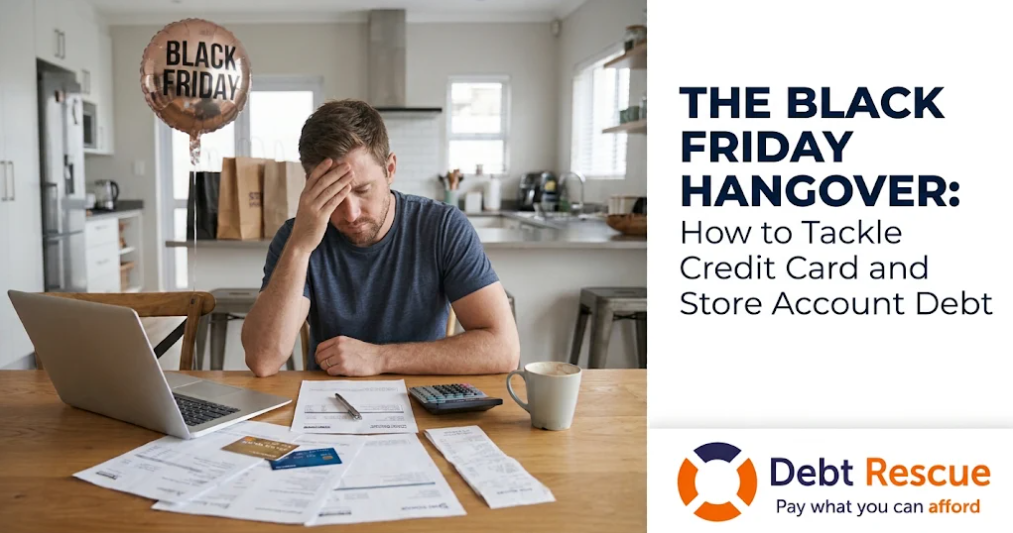
Black Friday has a funny way of making us feel like we’re saving money while we’re actively emptying our accounts. Between the countdown timers and the flurry of promotional emails, it’s easy to swipe a card on items you didn’t even know existed an hour earlier.
Then January arrives: the holiday rush fades and reality sets in. If you’re staring at mounting balances and wondering where to start with maxed-out store accounts, or how to pay off credit card debt in South Africa, take a deep breath; you’re definitely not alone. Millions of people nurse the same financial headaches every year. The important thing is not to panic, but to take smart, deliberate action before those balances snowball out of control.
The Potential Dangers of Minimum Payments
When money’s tight, paying just the minimum balance due on your credit cards and retail accounts feels like a lifesaver. It keeps the credit provider off your back, maintains your account in good standing, and frees up cash for fuel and groceries. Unfortunately, that minimum payment can be one of the most expensive traps in personal finance.
In South Africa, credit card interest rates hover near maximum caps. Store cards (from retailers like TFG, Truworths, Woolworths, or Mr Price) often include administrative fees, service fees, and credit life insurance premiums on top of high interest rates. When you pay only the required 2.5% to 5% minimum installment, almost the entire amount goes toward interest and service charges. A tiny sliver actually touches the principal debt.
Relying on minimum payments turns short-term bargains into multi-year commitments. That television or airfryer you scored on a Black Friday deal could easily end up taking months or even years to pay off, costing you much more than what the original price tag showed.
Practical Steps to Take Right Now
If you want to know how to get out of credit card debt, it’s quite simple: stop the bleeding immediately. You can’t climb out of a hole while you’re still digging.
Here are four concrete moves you should make today:
1. Remove the Temptation
Take your credit cards out of your wallet and delete your saved payment details from online shopping profiles and delivery apps. If you don’t have immediate, frictionless access to credit, you are far less likely to make impulsive purchases.
2. Freeze Your Retail Accounts
Store cards are uniquely dangerous because credit limits feel small and manageable, but having three or four open accounts quickly adds up. If you find yourself continuing to swipe for clothes, homeware, or cosmetics, you need to understand how to put retail accounts on hold.
Contact your retail credit providers directly and request an administrative freeze or ask them to lower your credit limit to match your current outstanding balance. This locks the card from taking on new transactions while allowing you to keep making payments toward clearing what you owe.
3. Calculate Your Total Exposure
Ignoring account notifications will not make them vanish. Sit down with your statements and write down every single balance, interest rate and required monthly repayment. If you want a quick, realistic overview of where your monthly income is disappearing, run your numbers through our free debt calculator. Seeing the exact figures in black and white gives you a clear baseline to work from.
4. Build a Bare-Bones Survival Budget
Cut every non-essential expense for the next three months. Pause subscriptions you rarely use, pack lunches for work, and redirect every spare Rand you find toward your outstanding balances. These small changes add up to bigger differences in spending over time.
Debt Review: When Self-Budgeting Isn’t Enough
DIY debt strategies only work if you have money left over after buying food, paying rent, and covering your utilities. If you’re skipping essential grocery items, borrowing from one credit facility to pay off another, or losing sleep over calls from collection agencies, budgeting alone will not solve the problem. These are clear signs of over-indebtedness. Waiting will only lead to legal notices, adverse credit bureau listings or even asset repossession.
This is where understanding how debt counselling can help you makes all the difference.
Established under the National Credit Act (NCA), debt counselling (also known as debt review) is a formal, legally regulated solution designed to protect South African consumers who cannot meet their monthly debt obligations.
When you partner with a registered debt counsellor like Debt Rescue, we take over negotiations with your credit providers. We restructure your repayment terms by extending your repayment periods and negotiating significantly reduced interest rates. We then consolidate all your qualifying retail accounts, credit cards, personal loans, and vehicle finance into one affordable monthly payment that fits comfortably within your household budget.
Crucially, from the moment you apply, your assets are legally protected from repossession.
Take Control of Your Financial Future
A single weekend of Black Friday spending shouldn’t dictate your financial security for years to come. You don’t have to navigate high interest rates, aggressive collections calls and mounting debt on your own. At Debt Rescue, our team has helped thousands of South Africans break free from the cycle of debt and regain control of their lives.
Reach out to our team today for a confidential, obligation-free quote and let us help you build a clear, stress-free path back to financial freedom.